Bakandamiya by Saddiq Dzukogi
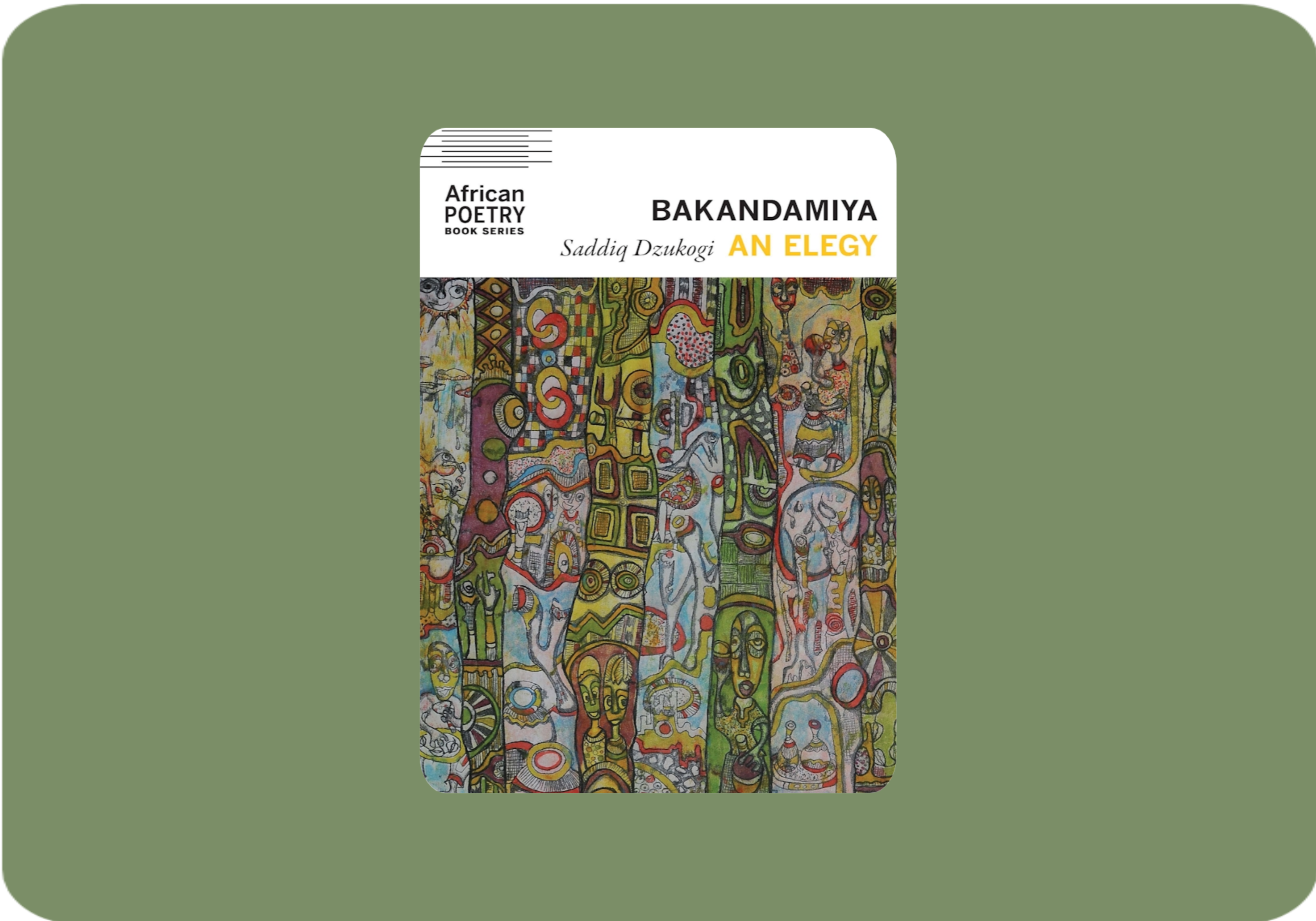
The first Bakandamiya I ever read, published in Quarterly West in 2023, is titled as the seventh, but it never made it to the book. When I read it, I didn’t know what to make of it, being an earlier part of a lengthy elegy and all. But what I did know what to make of are the following lines that read: “What is the difference between mother and country, / if not for unconditional love?” Philosophically, I cannot speak to the truth of mothers having unconditional love for their children; each person has to make that judgement for themselves. However, the sense in the lines is easy to see because, historically, Nigeria has proven through its tradition of unscrupulous actions and inscrutable bouts of grand inactions to have no love whatsoever for its spawned and sprouting citizens.
And by the time I get to the Haske sequence in the book, Bakandamiya has proven to be one of the most incisive criticisms of—and historical documents about the transformations of—the Nigerian state since the inception of the country I have read, at least since Dami Ajayi’s Clinical Blues. In “Bakandamiya XII.,” talking about the lethal ambience of the whole country, incubated and secreted by a formless sort of insecurity, predictable and unpredictable kinds alike across the lands, Dzukogi writes in disquieting regret that, “I should have known / there was no need to go looking for death / elsewhere, beyond its own borderlands.” Nigeria—it has even been verified by the recent (as in mere days to the moment of writing this piece) news of senseless killings in Kwara, Kaduna, and Plateau States—is the borderlands of death.
It has been so for a very long time, though, at least since the coup d’état of January 15th, 1966 headed by Patrick Chukwuma “Kaduna” Nzeogwu. In the first section of “Haske,” Dzukogi narrates the bloody occurrence of that grave day without the conventional aestheticization of what Lara Palmqvist brilliantly calls “the darker corners of human experience”:
The North is mourning; today is the day Nzeogwu slayed Ahmadu
and Hafsatu. He is on tv, a magic box like Inna’s calabash, calling a beloved corpse
coward. Coward because a wife shielded him
with her body, thinking only a beast will kill a pregnant woman.
Everyday now, it is the whole country that mourns, and each of us is Hafsatu in one form or the other against the beasty intentions or non-intention of our government, racked by the unsavoury combination of incompetence, indifference, entitlement to power, and corruption. And the body politic, having been shown times and again the incredible senselessness and intense culture of backwardness in the political class brought on by nothing but the equally unsavoury worship of self-interest and cronyism, have lost faith and hope about the possibility of redemption, both political and material, for our beloved country. Communicating the complexity that goes into these various strata of Nigeria as a troubled nation is, more than anything, the aim of Bakandamiya, and as a poetic text it comes as close as any to having an enlightening effect on the mind about the same. I only wish Nigeria hadn’t become too battered a state and its citizens too buggered a consciousness as to be priced out of simple and basic amenities such as being able to afford a book in order for them to read Dzukogi’s comprehensive, if sometimes quaintly and sometimes unnecessarily emotional, analysis.
Bakandamiya has been described, by the poet himself, as an epic—that is, a poem that aims to tell a story. However, the story that the poem tells is not a linear story about a particular subject, a particular people, or a particular time; rather, it consists of stories about disparate subjects, different peoples, and distinct times. It tracks because “bakandamiya,” according to the poet, “is a poem that keeps growing and never ends—at least until the poet ceases to exist or a similar fate silences their voice.” It is thus, by its nature, an ambitious project because such undertakings are as rare to come across in this age as it is to come across an eland inelegant. Not that the book is endless; it is not. What it is, however, is justified in its thematic catholicity, and I am here for it.