Ginsberg, sing me a jiwang song! by nor
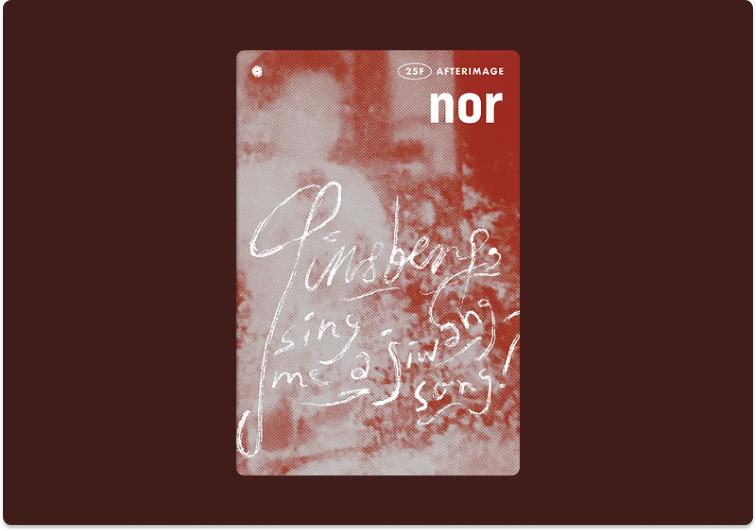
Of the ecstatic, the joyous, the exuberant. nor's poetry chapbook Ginsberg, sing me a jiwang song! is their follow-up to their debut collection homesick, both released in 2025. While homesick centres the nostalgias of heartache, lost love, and diasporic distance, Ginsberg bursts with an ebullience, unapologetic in its celebration of delight. Both books represent a new phase in nor’s creative journey, a new movement from their previous aesthetic concerns as a multidisciplinary artist and photographer.
Based in Singapore and of Malay and Indonesian heritage, nor’s artistic work has sought to situate identity and community within speculative timelines. Gender performance, ethnographic portraits, and transnational histories have been key frameworks against which these interrogations have been carried out. These concerns hold in Ginsberg, but seem to take a secondary importance – the chapbook dwells in various forms of delight, rooted in a love for place and country, for friendship, for the numinous, and for family. Styled as a mixtape, Ginsberg embraces a certain musicality: its Side A is titled ‘Ruin A Beautiful Day’, with 8 poems, while Side B is titled ‘Surrender to the Joy Within!’, consisting of 10 poems. Interspersed are various ‘Interludes’, from lyrics with scrawled guitar chords to prose entries like ‘Lucky Strike’, which reflects on a lover and invokes Frank Ocean, a jiwang singer of another sort. The chapbook concludes with 3 ‘Bonus Tracks’. The chapbook’s very structure is evocative of a certain millennial romanticism, woven around mixtapes burned for subjects of one’s affection or desire.
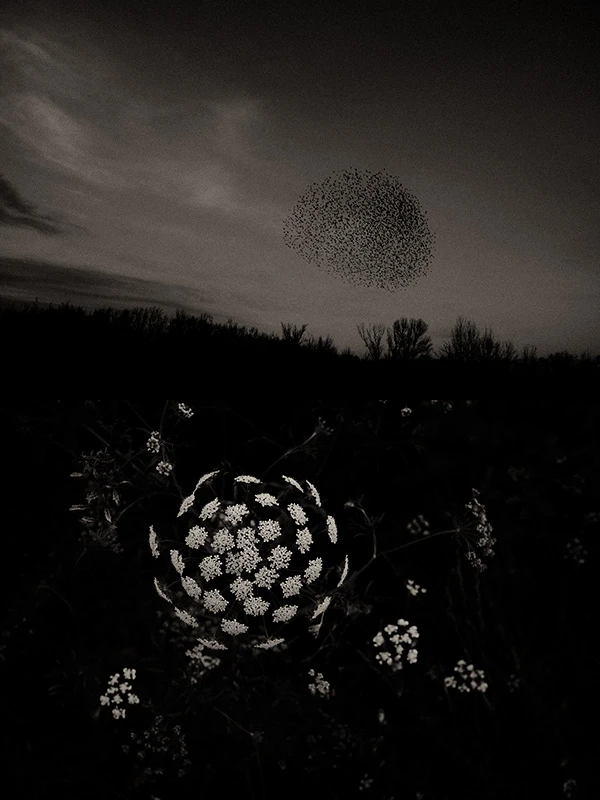
This love for music is also apparent from the book’s title. Ginsberg is the famed Allen Ginsberg, the Beat poet whose work has been characterised by ferocity, abandon, and an embrace of the sonic and rhythmic elements of music. Ginsberg viewed poetry as a kind of ‘spoken jazz’, weaving bop prosody and blues musicality into his work with performance in mind. What follows is the notion of the jiwang song, with ‘jiwang’ being a term in Malay slang describing an intense heartbreak or sentimentality. This overwhelming, even excessive, romanticism found its expression in ‘jiwang songs’, rock ballads in Malay that were most prominent in the 1980s and 1990s in Malaysia and Singapore. nor’s vision is of their poems bringing together these two lyrical, musical movements, with various sections of the chapbook prefaced by lyrics from songs such as ‘Taman Rashida Utama’ by Wings, ‘Gerimis Mengundang’ by Slam, and ‘Suei Dalam Debu’ by Iklim. The mixtape itself contains another mixtape, an additional soundtrack to the sonic textures of nor’s chapbook. In contrast to the watery metaphors of homesick, with many poems set amidst swimming pools and coastlines, Ginsberg embraces the motion of travel and the freneticism of cities, crossing Singapore to Kuala Lumpur, Vietnam, Indonesia, Jordan, and London. They are cities experienced at their most energetic, but also at their most intimate in domestic spaces. To capture this sense of the multiplicity and the polyphony of the city, the chapbook embraces design principles from zines, featuring variations in text and page colours, interspersing nor’s own photography, and featuring collage type layouts and differences in kerning and font, making for a beautiful volume.
Side A’s ‘Intro’ track, the poem ‘The Heart’, introduces the persona’s yearning to ‘sing / in its native tongue’, to ‘sing / a melancholic 90s tune / written to be sung in a stadium’, with guitar chords that ‘catch you off guard / and ruin your day!’ These are the eponymous jiwang songs, sung by ‘Men in mullets’, about ‘dust turning into diamonds’. Here, the ‘jiwang tune’ is an ‘antidote for grief, / for anticipation’, both for loves unattainable and the future loss of loved ones, but also part of the memory of the speaker’s days as a child at their grandparents’ home waiting for their parents, ‘boombox blasting through yearning / through lifetimes’. In ‘Kuala Lumpur Tune (Part 2): Kau Kekasihku’, the speaker writes that the lyrics of these songs ‘have become a way for me to come home where I may be.’ There is a sense of severance from a full emotional belonging in one’s mother tongue that nor identifies as peculiar to Singapore, their ‘teen self [being] asked too early in life whether I would like to go home and rest for the day or pursue Higher Mother Tongue after school.’ The effort to develop a deeper proficiency in Malay is stymied, addressed pithily: ‘Belonging takes effort, apparently’. While jiwang songs are present in other literary works, interacting with Malay poems, but also featured prominently in Fairoz Ahmad’s novel Neverness, with nor it is not just the sentimentality of the songs’ images themselves that provide the collection’s point of departure, but also their extravagance and hyperbole, and their communal nature.
This is taken up in the poem that follows, ‘october sonata’, in which the persona laments the feelings of being hurried amidst the bustle of a frenetic Singapore. Even a borrowed book imputes its own kind of time pressure as the persona declares:
Then there’s the Ginsberg I have to finish before the 21-day
loan is over.
He accompanies me through the anxiety,
he speaks to me in Spanish,
then Ginsberg speaks to me in Portuguese,
in Arabic,
finally French.
Ginsberg is born again as a Brazilian man who speaks
Bahasa Indonesia better than English and has stolen
my heart.
Now I ask myself who do I limit my own life’s narratives?
Ginsberg, sing me a jiwang song!
Ginsberg, laugh with me and my lover friends.
There is a certain metaphysics at work as the Ginsberg of the borrowed collection becomes both a subject and an imagined muse – soothing, multilingual, unbridled. It is a mode of intertextual address that drew to mind Spencer Reece’s invocation of Lorca in his recent collection Acts, a poetic forbear ever present in one’s imagination. nor's is a Ginsberg beyond the Ginsberg that was, railing against the constrictions of a post-war America’s conservatism, but a Ginsberg who symbolises possibility and joy.
This interplay between sentimentality and ecstasy introduced in these two poems forms the emotional tenor of the rest of the chapbook. nor'’s eye takes on the observational quality of the flaneur, perhaps like Whitman, or Hughes, presenting diaristic renderings of day-to-day life in poetry. ‘reservist rhapsody’ shows the speaker musing while on reservist duties as a coast guard, observing the transformation of the coasts as ‘lighthouses’ are on ‘islands now all land and sand’, the future abodes of shopping malls. ‘9 to 5’ presented as a loop, observing the ‘people’ in ‘small boxes’ on ‘packed buses’ and ‘crowded trains’, how the jostling from constrained urban stress draws from the speaker the injunction ‘be gentle with me! / you and I are not in a competition / for who’s had a lousier day’. In ‘O Great Nation, Singapura!’, the speaker addresses a patriotic affect with the invitation, ‘Tell the story / where my silence / is your statehood’. These are observations of a bridled joy, a muzzled ecstasy, swallowed by busyness and obligation characteristic of life in Singapore.
There is much to admire about Ginsberg, sing me a jiwang song!, especially the directness and clarity of its emotional arc and its narrative, particularly in the sense of growth in the poet’s own life. The poem ‘coming-of-age’ addresses this aptly:
This is indie-film cinematic, creative nonfiction-turned cult classic. This is coming-of-age, young adult, underdeveloped, no-need-to-speak-of-the-prefrontal, you’ll-want-to-see-me-from-the-back-instead. You’ll hate to see me go, but you’d like to watch me leave. This is crush-crush-crush, this infatuation, this is maybe… queer representation?
[…]
This film ends with me revisiting the same block of flats one day. This is yearning. This is fully-realised now. This is grief and this is the closest I’ll come to closure.
Poems such as this, as well as the closing poem ‘POTLUCK’, are reminders that nor’s warm, plain style finds its origins partly in spoken word, less contrived, less varnished, but wholly inviting. There is a playfulness to this orality and interplay of media, a bildungsroman, the symbol of an individual experience of maturation, the film of one’s own life.
It is to this that the speaker seems to turn outward, beyond the ruins of beautiful days to sources of joy without and within. In ‘Kuala Lumpur Tune (Part 1)’, the speaker follows the impulse to take the last bus out of Singapore; while waiting for their lover-friends Taufiq and Rifqi to wake, the speaker is suddenly struck by how ‘hope is fiercely on display’ in Malaysia, in contrast to being ‘barely’ able to ‘mourn’ in Singapore. It is the visibility of Palestine’s ‘flags [lining] the streets’ that kindles this hope. The speaker is compelled to ‘say a little prayer for peace’:
Lord, end all suffering!
Lord, end all oppression!
Lord, end colonialism!
Free the people from Gaza, to Puerto Rico!
Merdeka, merdeka, merdeka!
The anaphora recalls an intercessory Christian tradition, but also a revolutionary one, even as nor writes from a Muslim positionality. The language of prayer lends a moral urgency, not just to condemning the ongoing genocide in Gaza, but to the interconnected forces that conspire to induce suffering, especially subjugation in all its forms. The invocation of Puerto Rico draws to mind its colonial status as a United States territory, but the use of ‘merdeka’, or freedom in Malay, hearkens back to the independence movements in Malaya against British colonial rule. This is a notion taken up again in ‘Hymn for Jordan’, as the speaker recognises ‘You and your lovers / a-groovin’ towards liberation’.
The entwining strands of religiosity and a contention for joy and justice recur in the poems that follow. In ‘Christ in Vung Tau’, the speaker declares,
My feet will not let me stand straight
on the shoulders of your white Jesus
It’s not religious submission
but purely divine comedy
My veneration will not overcome
My own fear of heights
In the poem ‘31st’, birthday songs with friends morph into joyous aspiration:
Our request is earnest
Our desire is simple
Our labour is love
Our celebration is life
And in ‘Bingo!’, one of the chapbook’s ‘outro’ poems, the speaker declares:
Our tongues are sweet to those who would hear, we’ll thrive even if you don’t want us here, we don’t care, we’ll move to Europe or Australia, we will make life, where my believers in God and where are my queers, can you believe they only want us to tick one box at time, where are my allies to dispel the fears
Joy, laughter, and promise emerge out of these moments and ceremonies of celebration and delight. And at the chapbook’s conclusion, it is a description of a grandaunt’s funeral in which these threads entwine:
I want to say that this is a proper Malay household in Singapore; we laugh, even in our grief. Islam advocates peace through stillness in worship, but my people’s prayers are sung with melody. How like that? We are a people of song–we are meant to be lively, always. We cannot be silent or silenced, even if this country would prefer us that way. The babies below the age of 5 surprisingly slept through all that noise. Light work. They’re used to joy in all lifetimes.
It is joy that forms the emotional thread, rhythm, and pulse of the chapbook, especially a joy that emanates from marginality or stricture. This is what brought to mind writers such as Mahmoud Darwish and Ross Gay. It is Malay joy, queer joy, divine joy. It is joy presented in couplets and prose poems, song lyrics and diary entries. It is a joy that is familiar with, and often proximate to, grief. It is the joy that supports and sustains dreams of liberation for the oppressed and colonised, and the joy that persists under conditions that seek to snuff them out. It is a joy that nor has shared, with generosity, in this chapbook.









.avif)