POEM OF THE MONTH
May
Sonnet

Le mal de mer (Seasickness) by René Magritte (1947-48)
The Voyage of the Beagle
"I am very poorly today and very stupid and hate everybody and everything.”
--Charles Darwin to Charles Lyell, October 1861
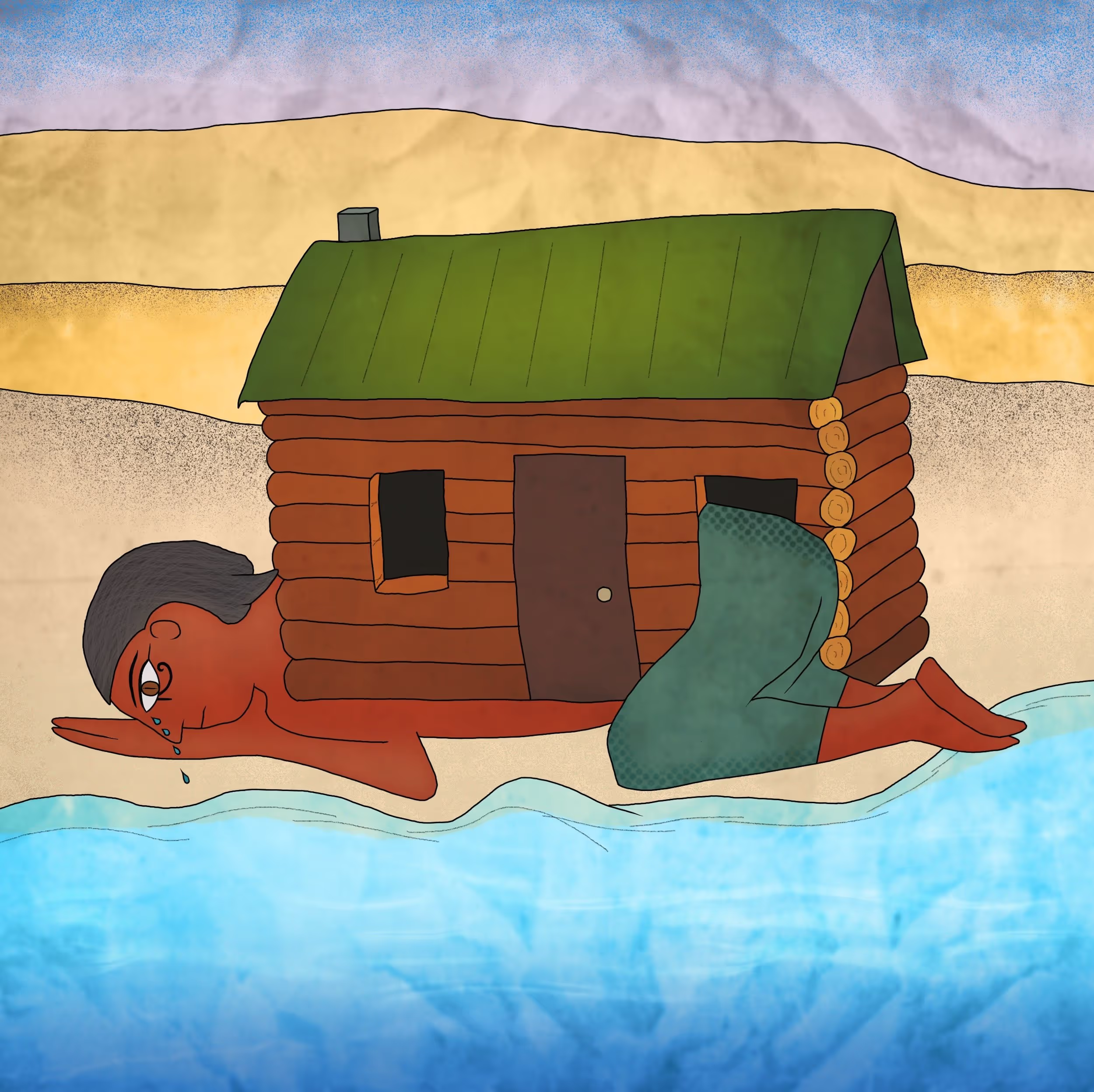
Stand next to me and retch over the rail
until our microbiomes sink and merge,
develop shells and pulses, dragging scaled
anemic wonder to the shore. Purge
everything you thought you understood,
the ant, the barnacle, and shout your weakness
to the wind (o stupid dog! o no-good
plodding flesh begetting bile and pique
and paradox). Somewhere, a pointed beak
has learned to relish suffering, to feed
itself on cactus pads and air. A hound
has traveled to the waning moon and back
inside a howl, has nosed the evening’s grief.
It tracks that scent to you, and calls it friend.


Betsy Mitchell Martinez holds an MFA from the University of Michigan. Her recent poems have appeared or are forthcoming in Beloit Poetry Journal, Gulf Coast, 32 Poems, EPOCH, Southeast Review, and elsewhere.

I first became interested in Charles Darwin a few years ago, after reading an essay that discussed his incredible scientific work against the backdrop of his crippling chronic illness. More recently, I discovered his correspondence at https://www.darwinproject.ac.uk, in which he expresses frustration with himself and the world in the most wonderful 19th century language (for example, describing himself as the “most miserable, bemuddled, stupid Dog in all England”). Although I don’t typicallywrite formal poems, I experimented with a sonnet here because the form includes both rigidity and evolution. My hope was to capture some of the tension between the isolated, individual body—which, for Darwin, must have felt like a cage—and the fluidity of ideas and species over time.

I love that Betsy Mitchell Martinez used one of the most rigid forms to write about the man who changed the course of history with his theories of evolution. Darwin spent most of his famous voyage seasick and miserable, and Betsy doesn't let us forget it. These 14 lines hammer into us the fact that the body is a cage and a crucible. The first four lines are, frankly, magical. We go from vomit to beauty through evolution which is poised as divination (as opposed to being something against divination). And of course, the bubbling of intimacy in the space between two sick passengers leaning over a railing. This sonnet is a soft beautiful ode to a great historical figure who I wish could read this poem. Certainly it’ll make him feel seen & comforted. This sonnet is a reminder that the greatest insights often come from people who feel wretched, bemuddled, trapped in bodies that won't cooperate.







.avif)
.avif)
.avif)

%20by%20Bruce%20Goff%20(1955)%20(1).avif)



.avif)



.avif)