POEM OF THE MONTH
June
Fathers
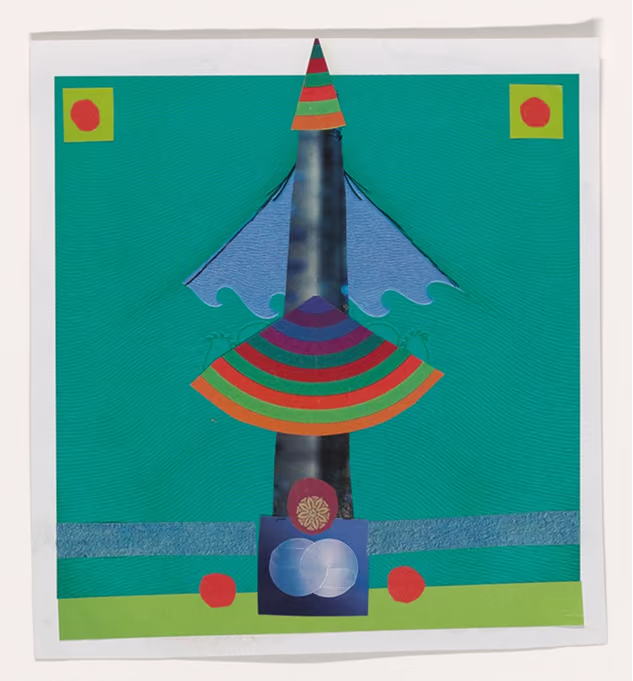
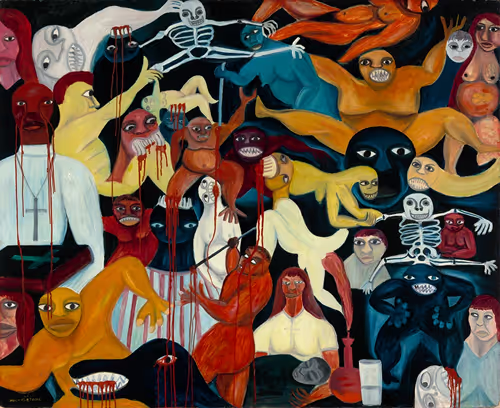
%20by%20Bruce%20Goff%20(1955)%20(1).png)
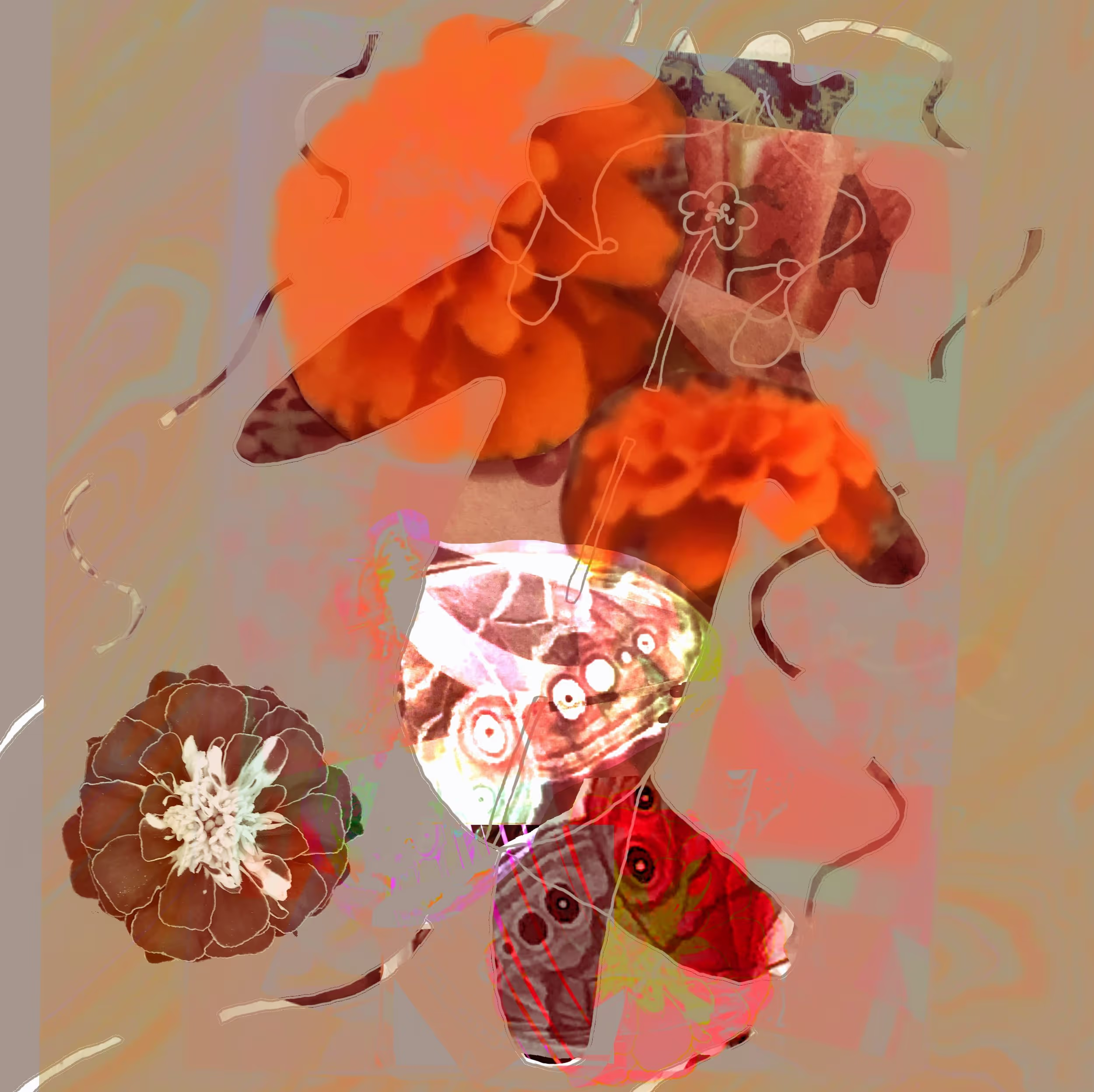
Untitled (Composition) by Bruce Goff (1955)
Last night I dreamt
after Wo Chan
my mother was a thimble. My father was a needle.
During the day, he sewed blankets. Large ones for God,
small ones for the devil. Every night, he left the safety
of my mother and went into the night unprotected.
I was a spool of pink thread. Small. From a discount
bin. Sometimes I was useful. Mainly, I was pretty.
Still, I was hopeful that one day I would make it into a blanket.
I wanted to be warm, soft like rabbit’s custard. I wanted
to snuff the fire of my father’s sins with the length of my body.
My father liked the cold night against his bare eye.
Danger got him going. Yet, the red outline of my mother
always pressed into the circumference of his thoughts.
In the morning, I can still see him slinking home—
the tip of his body dull and dirty. Used.

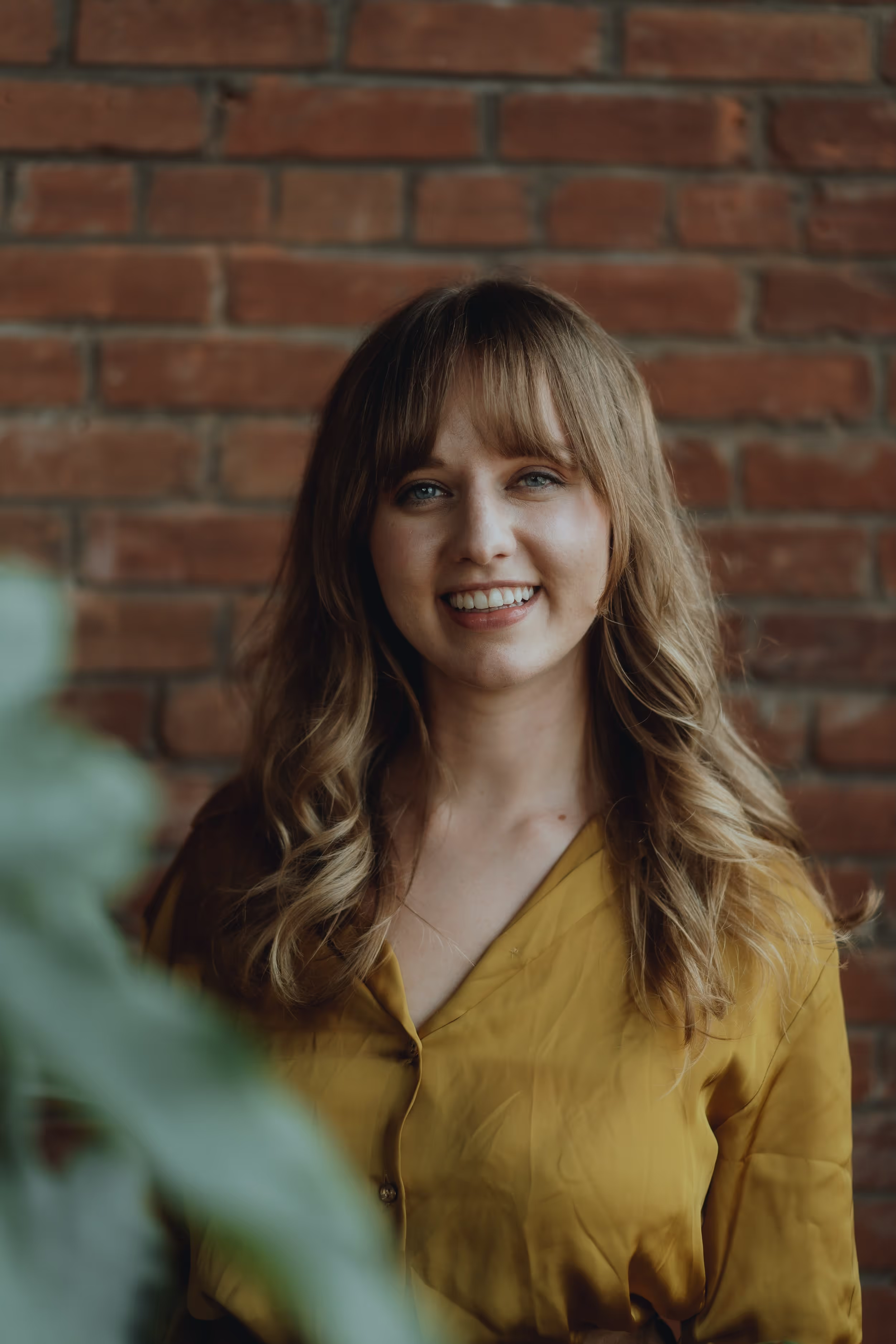
Maria Giesbrecht is a Canadian poet whose work explores her Mexican and Mennonite roots. Her debut poetry collection, A Little Feral, was released by Write Bloody Publishing in May 2026. Her writing has appeared in The Literary Review of Canada, Narrative Magazine, Grain, Only Poems, and elsewhere. She is the winner of the 2025 Jack McCarthy Book Prize, the Lesley Strutt Poetry Prize, a finalist for the 2025 Narrative Poetry Prize and the 2026 Narrative Short Story award. Maria hosts Gather, an international writing community that connects poets worldwide. Born in Durango, Mexico, she now lives near Toronto, Canada.

I wrote this poem after reading Wo Chan’s poem "Such As" during a brilliant poetry workshop on Origin Stories hosted by Chen Chen in Gather. This year, I've also been writing a lot of disclaimer poetry, in which the title or the first line provides context for the rest of the poem and its truth claims. One of my favourite poems, Lynn Emanuel's "The Sleeping," starts with "I have imagined all this." There are some things I write about where a disclaimer like "Last night I dreamt" gives me a way to get closer to the truth than without it. Subconsciously, a layer of safety is sometimes required to touch on topics like these. Writing about my father through the lens of a dream felt both truer and more compelling. The dream framework created enough distance for me to say things I might not have been able to say directly, while still remaining emotionally honest.

I love the conceit of Maria Giesbrecht’s “Last night I dreamt” — mother as thimble, father as needle, speaker as a spool of pink thread — it’s deceptively simple but the world it builds is anything but. Every detail in this poem earns its place. The father sews blankets “large ones for God, / small ones for the devil.” Hah! Already we know everything we need to know about his proportions of devotion and vice. And every night he leaves the safety of the thimble and goes into the dark unprotected. What also got me is the speaker’s self-positioning: “I was a spool of pink thread. Small. From a discount / bin. Sometimes I was useful. Mainly, I was pretty.” I love that (love the lines, hate that they had to be written): the child as afterthought, as ornament, as something sidelined. And still: “I was hopeful that one day I would make it into a blanket.” The desire to be woven into the family narrative, to matter, to be warm enough to undo harm. “I wanted / to snuff the fire of my father’s sins with the length of my body” is a devastating admission: the child who believes she can absorb enough damage to redeem a parent. Maria wrote in her contributor’s note that the dream framework gave her enough distance to say things she couldn’t say directly, and you can feel that calibration in all of these measured lines — the poem is so tender even as it is brutal.




.avif)
.avif)
.avif)

.avif)


.avif)