Aurora Comes Online by Haley Bossè

Reviewed:
Aurora Comes Online
by Haley Bossè
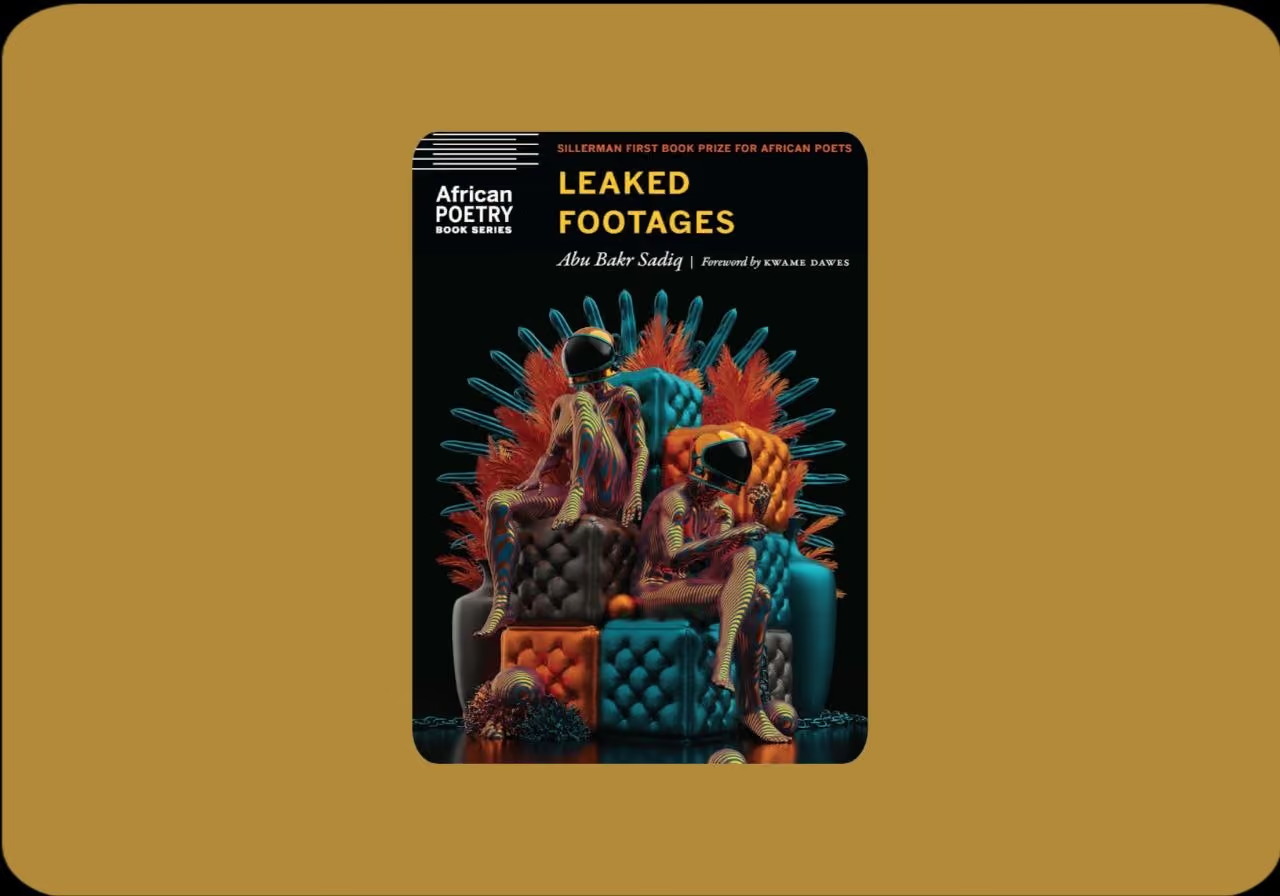
Game Over Books, 52 pages, $18.00
In the current terrifying world of AI and all the unknowns that are coming with it, Haley Bossè has imagined a character who grapples with identity and gender, all through the lens of the online world. Throughout the collection, Aurora Comes Online, the character Aurora looks out of the screen to us the reader/the user and asks us to contemplate the frameworks we are programmed to filter our world through. Using both digital and real world touchstones, we witness Aurora interrogating our world and trying to make sense of it. Bossè’s character seeks to touch the reader/the user/the world in ways I found personally resonant, from mourning while watching the passing body of a beached whale in “Witness The Passing of a Whale” to examining the effects of Jennifer’s body on the bisexual psyche in “Aurora Touches Jennifer’s Body”
Lines such as “What is a body without eyes to unwind it?” from Bossè’s poem “Aurora Visits the American Girl Doll Hospital” and their poem “The Computer Imagines Me a Boy” which starts with the a command description: “+Freckles + Red Hair + Crooked smile - Smile + Bushy Eyebrows + Jeans - Shirt + Mom’s Eyes - Dad’s Psoriasis” render alternate versions of the human body from the perspective of a quasi virtual being, asking us to question what being is in the modern world. Can we input commands and output human? Are we just a collection of our parents body parts and DNA? And who is watching us from the screens we use?
Later in the collection with poems such as “Render Me as a Tradwife”:
>wrist deep in hot wet dough
>waiting to be floured
>hands as soft as you wanted
>all of me pressed thin and pink
>face painted unblemished
>feet precise
And, “In a World that Cares for the Unidentified Woman Found by My Childhood Home” we see contrasting images of what we call “woman” in the modern world, and we are asked how she is treated?
See: serial woman raising flags
growing homes rapidly in number
their bodies found to play.
Girls are especially well:
rough ly kind full and
each connected
Through this collection, Bossè takes apart the machine of gender and exposes it to the reader/the user, making us feel how tenuous our collective connection to these constructs are. The work is tender, enlightening, and haunting. For myself I also was inspired by the experimental nature of the poetry, I enjoyed the formatting of poems into code, and the references to apps my fellow LGBTQAI+ know and love/hate (CoStar) and by the way Bossè dissects gender in such a personal and unique way. Gender is a baffling question and I fear there is no answer to it, but while reading this collection I found solace in the perspective of another gendergrappling human.