Mermaid Theory by Maya Salameh
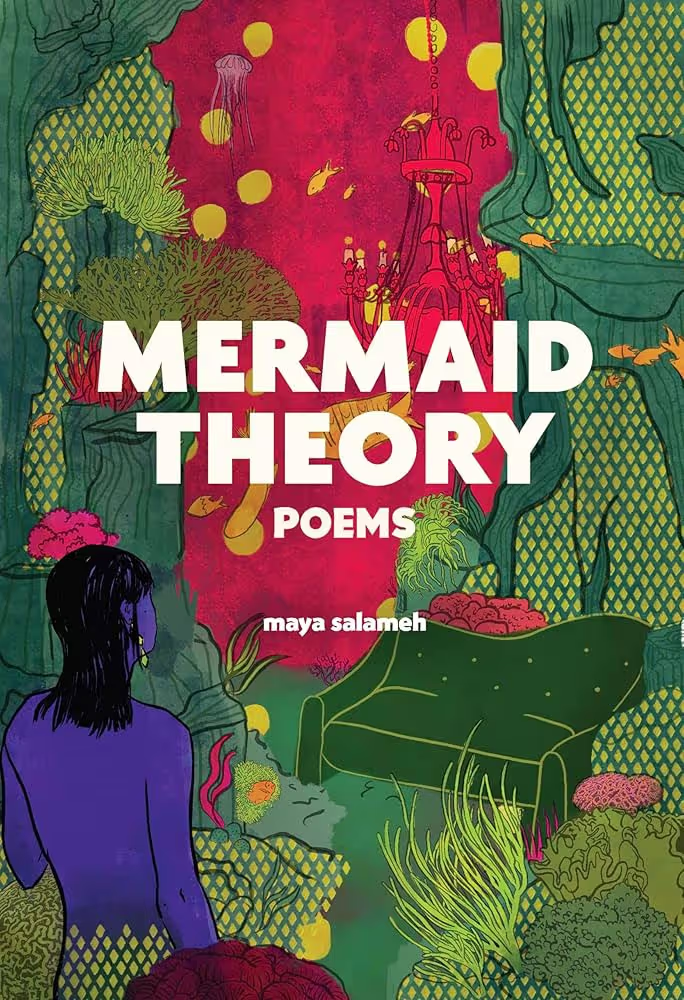
Maya Salameh opens her second poem of Mermaid Theory with a young speaker attempting to nail down exactly how this whole who-gets-into-heaven-thing works:
“asking my catechism teacher do
soldiers go to heaven? if someone
breaks into my house looking for bread
& I panic & hit them with a skillet
which one of us gets punished. who
gets punished?”
The idea of injustice is not just presented as a juvenile proposition for the Syrian- and Lebanese-American poet - it’s life. Salameh anchors the abstractions of injustice in its brutal ripples:
“On October 6, 2023, the value
of a Lockheed Martin share was $402. Today,
they’re worth $603. Every theory
is a burial.”
The end of Mermaid Theory’s second section ends with death, where Salameh laments “how [she gurgles] these letters, the dead’s grammar, the dead,” before opening to the next section, titled “Estuary/Girl.” There, meaning is carried out into the breadth of the sea, where Salameh claims “the water” as “the widest thing I’ve ever been taught.”
As Mermaid Theory expands its world - god becomes less something to be remedied by catechism, but rather experienced in full beauty. Like every good siren, beauty is never left off the page in Mermaid Theory. She writes of a lover whose “hands leave zinnias on my legs & we’re learning / control is the opposite of love.”
Well after the skillet-shaped bruises might’ve healed, at the end of the book, Salameh’s speakers are older, wiser, and a good bit more relaxed. Their rigid spirituality evolves into a song of adulthood’s tangible sincerity: “we sing until marrow, muscle, / ligament, myth. may peace be upon you. & we make it.”
Throughout peace, war,, womanhood, and spirituality, Salameh keeps circling this idea of growth - deepening its meaning with each pass. Growth is cyclical here - death and resurrection turning into each other. Mermaid Theory’s brilliance is that motion, like the midday sun lingering on seafoam as something new rises from the water.