Clawing for Awe and Transcendence
In conversation with
Compassion as the key to complexity
KARAN
Brennan, I love “I Never Played The Sims Because Being God Seems Exhausting.” That title is so fkn good. The poem ends with “I only want to run / headlong into that which / wounds me.” The poem toggles between the exhaustion of control (brushing teeth, being god) and the desire for self-destruction. Where did this poem come from? What draws you to write about control and its failures?
BRENNAN
This poem arrived after seeing a post about The Sims, one of the grim reapers taking their Sim dog to the afterlife. I have never played it but that it’s like a simulation of reality seemed like a potential place to explore heady ideas. I never write a poem where the title comes first but the title for this one did. There’s never a remote idea where a poem will end up; that it ended up being about control and free will and self-destruction seems to reflect what was on my mind at the time. I was at the very start of making lifestyle changes and afforded a bit of a vantage point to apparently realize the headlong running I was doing beforehand.
KARAN
I am a fan of the kind of surrealism you employ in “Straitjacket Wedding.” Designer straitjackets, zinnias clenched in teeth, the priest swigging bleach, time freezing in a blink. It’s funny and inventive and serves the meaning/narrative of the poem. “In a past life, / they lurked these streets searching for it. / Now, they stare into the eye of the moon, / dream of snorting it with a corvette key.” What si your affiliation with surrealism?
BRENNAN
I think I always have a tab of The Surrealist Manifesto open. Exquisite Corpse is fun to play, especially with those who don’t dabble in poetry. It shows how accessible poetry is and the poetic capabilities we all have. The subconscious influences all my writing; every poem is automatic writing, starting with a word or image with zero idea where the poem is swimming toward or trying to say. It’s probably what drew me to poetry in the first place. It’ll be years later that I look back and realize what the subconscious was trying to say. The poem is smarter than its writer always, as are our dreams in our waking lives, so using surrealist techniques as a poet feels the most natural, with the deepest potential for surprise and interpretation. The surrealist Paul Eluard’s quote that “There is another world, but is in this one” is a talismanic mantra in ways both spiritual and material.
KARAN
Fathers haunt these poems. In “The Orphans,” your father cries out from his crib while his mother forgets Glen Campbell’s name three times. The drunk trivia games on the drive home. “He carried me through the door, eyelids flickering.” Will you speak about your relationship with your father, and what poetry does to it? I’ve been working on a book about my father for almost seven years so I’m invested in knowing why we’re preoccupied with our fathers, like Kafka was.
BRENNAN
I’d love to know more about the book you’re working on – it sounds like you relate to how difficult it is to delve into the mythic father figure. It’s maybe become passe in the confessional sphere but it’s the topic that my mind and soul is drawn to (it’s almost a pathetic cliché that Sylvia Plath is my ultimate hero) (I also just purchased Sharon Olds’ The Father to read for the first time). It’s a complicated relationship that teeters back and forth in flux forever constantly between love and frustration. He’s artistically inclined but never got the opportunity to pursue it. He played basketball his entire life instead. He still writes down poems or lyrics now and then that are great. Poetry written about him is a way to articulate the inexpressible feelings in ways that really are, I wouldn’t say healing, but articulable in a sense that helps me understand him better. Toni Morrison has the quote that “it is more interesting, more complicated, more intellectually demanding and more morally demanding to love somebody” and I keep that in mind in both my poetics and daily life. Compassion is far more interesting in art? Most poems I write about our relationship that come from a place of anger just feel one-note. He’s a complex human and I want the poems to honor that.
KARAN
“Horoscope” is ambitious in scope—it starts with you googling “Cancer rising bald” and ends with strangers climbing buildings “that could reach the clear eternal, the complete unknown.” The poem moves from vanity to cosmos, from self-destruction to forgiveness. “I was fluent in my own self-destruction.” How did this poem come together? Walk us through your process?
BRENNAN
This was one of the lucky ones that came from somewhere out there. I saw this photograph of the sun and it does look like a head of hair; in a synchronistic twist I had recently been googling my astrological rising sign to see if it leads to baldness, and then the rest of the poem came from there. I apologize if it’s a bad joke. Synchronicity always feels a little terrifying, but I guess it can be great when you can use it in a poem and turn that terror of the sublime into one of awe. I workshopped this poem last semester and was asked what the aim of it was. The poem kind of goes all over the place, and I didn’t really know, but landed on awe, or transcendence. Always clawing for awe and transcendence.
KARAN
You have this fascinating relationship with pop culture and video games—The Sims, The Movies, Darth Vader and Luke, Jackie O, Glen Campbell. These references sit alongside spirits in muslin dresses and cosmic imagery. How does pop culture enter your poems? Is it nostalgia or something else?
BRENNAN
I’m not a gamer but I did love The Movies back in the day and was a film student before switching to creative writing. There was a time where I actively avoided using proper nouns for some god-forsaken reason. I thought it cheapened the poem or something but realized most of my poems that I loved name-dropped the Bhagavad Gita or Lady Bird or McDonald’s. When I took the poetry workshop with Steve Fellner at Brockport, he hammered in the importance of idiosyncratic nouns. I’m now a devotee to idiosyncratic nouns and by extension, pop culture, in poems. Why not incorporate my devotion to pop culture in my poetics? It’s more honest to my actual worldview so hopefully a more honest voice in the work. Nostalgia will never not be a wellspring and pop culture is a way to signify it. I think a poem like “Woodsmoke” shows one mode I enjoy writing in and “I Never Played The Sims” poem another. A balance between a mystical cosmic and hypermodern pop culture.
KARAN
Your poems range wildly in length and ambition—from the compact “I Never Played The Sims” to the sprawling “Horoscope.” How do you move between maximalism and compression?
BRENNAN
Great question… I don’t know? I definitely prefer a certain form and can be particular about line length. I’m obsessed with the inimitable sparse couplets of Cynthia Cruz. There’s literally nobody like her. I also really love the work of Tommy Pico, so elastic and maximalist. I think I’m still trying to find a balance between those styles in my own work because I’d love to write like both, but you know a Cruz poem when you see one and you know a Pico poem when you see one. That’s the dream. Can that be achieved whether through voice or form or how that works, no idea, but their singularity is the dream.
KARAN
In “The Orphans,” your grandmother has dementia, forgetting Glen Campbell, tripping down steps, speaking with ashes. The tenderness here is extraordinary. What does it mean to watch someone forget?
BRENNAN
It’s surreal but so quotidian that you forget how surreal it is. Her husband, my grandfather, passed from Alzheimer’s when I was a kid. My sister and I were sleeping over one night and heard her speaking with his ashes, and this was before she was really in the throes of dementia, much before. I have a manuscript that I’ve been working on for years that tries to immortalize them upon realizing that their generation has dwindled. I went through newspaper archives from her hometown of Ithaca and found all of these articles about her and her family and friends, many now dead. My aunt showed them to her on the TV, and she remembered all the names, all the people. She loves to see her great-grandbabies. And she still doesn’t like Trump when he shows up on the TV, so that says something. I think you used the perfect word; to watch someone forget is to want to remind yourself and others and the cruel world of this tenderness that permeates all things.
KARAN
This is a question we ask all our poets, though the answers are always wildly different: there’s a theory that a poet’s work tends toward one of four major axes—poetry of the body, poetry of the mind, poetry of the heart, or poetry of the soul. Where would you place your work, if at all?
BRENNAN
Poetry of the soul and heart? I’m not a huge fan of poetry that works on the mind over the soul, where you might have a thought epiphany but not a stirring in the soul; I might be bringing this over from film. I need a movie to make me emotional and cry. I really don’t care for, like, the puzzle box intellectual stuff (a projection of something, I know it). I’m really not well-versed in what poets count as what, but while I appreciate thought-focused poems, I ultimately gravitate toward the gutting or devastating. I really liked Sal Randolph’s answer to this question in her interview when she was Poet of the Week: the idea that these are all extensions of the same ineffable source. I love that.
KARAN
What’s the best piece of writing advice you’ve ever received? Alternatively: what would you tell other young poets about finding their voice or staying committed to the work?
BRENNAN
From Maria Brandt: cut, cut, cut. Humanize. From Scott Rudd: He used this equalizer method like for music but to calibrate the level between language or narrative in a specific poem, the devices one is using. Extremely useful visualizer. He brought song lyrics to class which helped me marry my love of song lyrics with poetry and articulate how an Iron & Wine or Lana Del Rey song is poetry. Steve Fellner and his love of idiosyncratic nouns: always use them. From Greg Sellers: stay true to your soul and the poems will always arrive. After this past semester at Syracuse, I apply the Mary Karr x-ray to every poem: locate the reader, direct language, there’s always a more interesting verb, don’t confuse the reader for the sake of confusing the reader. It’s just not necessary. Brooks Haxton teaches the same: to be clear and direct. There is no need for unnecessarily complicating a poem. And with all of these teachers I’ve had, they all have a bullshit detector for the poem, and I think all poets reading and writing have it too: you already know when a line is not truthful or bullshit or forced.
KARAN
Would you offer our readers a poetry prompt—something simple, strange, or rigorous—to help them begin a new poem?
BRENNAN
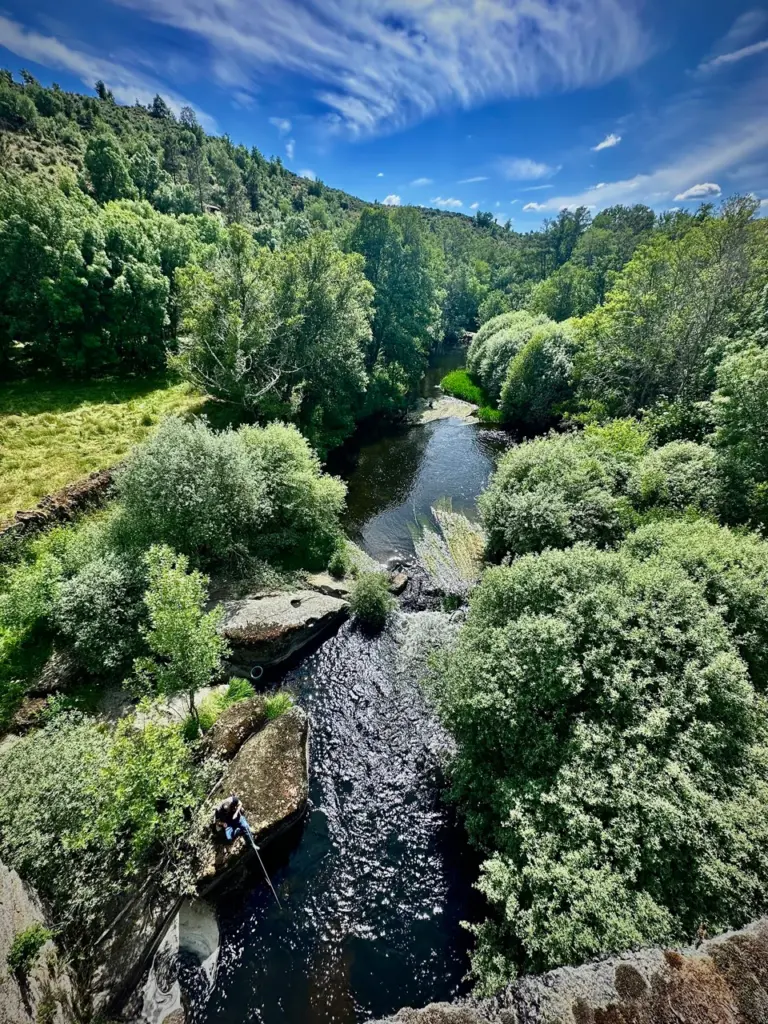
I’m terrible at prompts but I’m a huge fan of Charles Wright’s idea of backyard poetics. Sit outside and observe what’s there. This particular space can open up a poem to the entire universe.
KARAN
Please recommend a piece of art (a film, a song, a video game, anything other than a poem) that’s sustained you lately or that you wish everyone could experience.
BRENNAN
It’s Oscar season so I’ve been on an Oscar kick. Die My Love is a tone poem of a movie that I couldn’t stop thinking about. Kind of insane that Jennifer Lawrence isn’t win-competitive. I want to plug what I think is the best song of the decade so far: “S.W.I.M.” by Midwife. She invented her own genre that she calls “heaven metal”. If you smoke weed (or don’t), put your headphones on to that song and be healed. It’s a ritual – did it last week and cried. I think all the poet souls out there will resonate with its beauty.
KARAN
And finally, Brennan, since we believe in studying masters’ masters, who are the poets or artists who’ve most shaped your sense of what’s possible in language?
BRENNAN
Cynthia Cruz, Sylvia Plath, Frank Stanford,Dorianne Laux, Louise Gluck, Mark Strand, Galway Kinnell, Anna Akhmatova, Mary Oliver, Thomas James, Ada Limon, Natasha Trethewey, Alex Dimitrov, Virginia Woolf, Marie Howe, Toni Morrison, Albert Camus, Lana Del Rey, Sam Beam, Chan Marshall, Hermann Hesse, Sofia Coppola, Terrence Malick, Mike Leigh. Controversial take: Jonathan Franzen’sThe Corrections and Freedom are masterpieces. I love the photography of William Eggleston and Francesca Woodman. I have a Tumblr headlightsforever where I share all of the quotes and inspirations I come across. There are too many to name.
RECOMMENDATIONS
The movie Die My Love
The song “S.W.I.M.” by Midwife
POETRY PROMPT
Sit outside and observe what’s there. This particular space can open up a poem to the entire universe.




.avif)

.avif)
%20by%20August%20(A%CC%81gost)%20Canzi%20(1856).png)
%20(1).avif)